An Evening Soak: What a Bath Soak Is, and Where 'Yunohana' Fits
In the United States, a bath has long been a way to look after yourself, and lately it has drawn new attention as a way to set down the day's stress. Even for people used to Epsom salt, a mineral bath soak can still be unfamiliar. This piece explains what a bath soak is, what Americans are really looking for when they run a bath, and where Yunohana fits in — a mineral bath powder that has quietly held its place in Korea for close to 30 years.
A bath is already "me time" in America
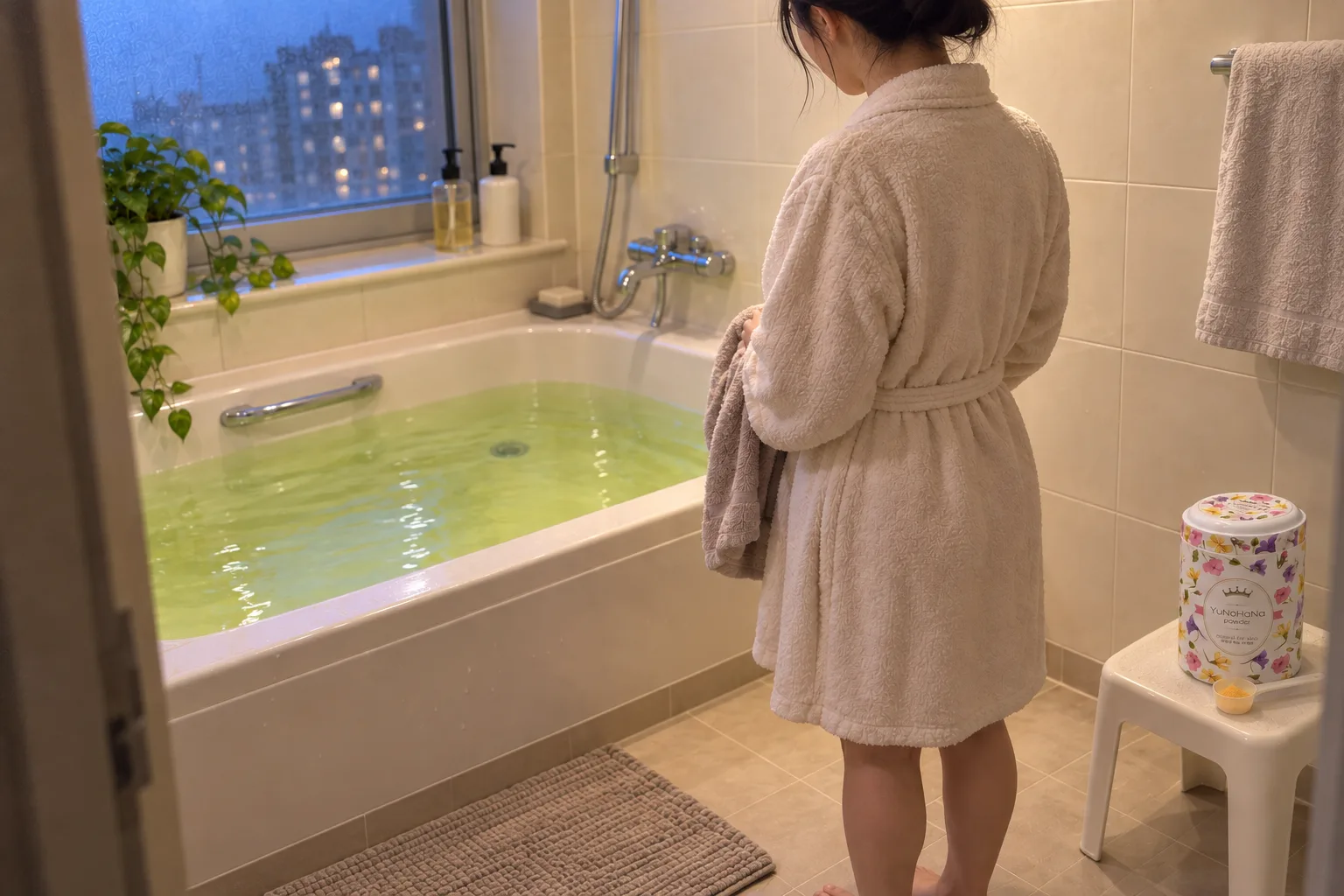
Americans have long treated a bath as time to look after themselves. Rinsing off the day's stress and warming up before bed became an ordinary habit, and lately that time has drawn more attention as a small ritual for settling the mind. As more people handle wellness at home, the bath has come back as an affordable kind of rest.[^1]
You may know Epsom salt. A bath soak is the next step.
Epsom salt is common in American bathrooms. People have long dissolved mineral salt in warm water to ease tired muscles and soak. A bath soak sits right alongside that habit. If soap is what you use to wash, a bath soak is what changes the bathwater itself. Stir a spoonful into warm water and settle in, and an ordinary bath turns into something closer to a hot spring.
Now it's about what's in it, not just how it smells
These days people want more than scent from a bath product. They ask whether it eases the body, whether it feels gentle on skin, and whether the ingredients are clean. More shoppers avoid artificial dyes and synthetic fragrance and look for something that comes from nature.[^2] A good bath soak doesn't stop at a pleasant smell; what actually dissolves into the water and reaches your skin is what counts.
Yunohana: minerals from a hot spring
Yunohana has answered that for a long time. It is made from natural minerals that come from a hot spring, so it doesn't rely on synthetic ingredients. Where Epsom salt is mostly one mineral, magnesium, Yunohana carries a range of minerals from the spring. It is gentle enough for a baby's bath, so whole families use it together, and skin tends to feel soft and comfortable afterward. In Korea it has been used for close to thirty years, a name that spread with little advertising and stayed alive through people who bought it again and passed it on.[^3]
How to use it
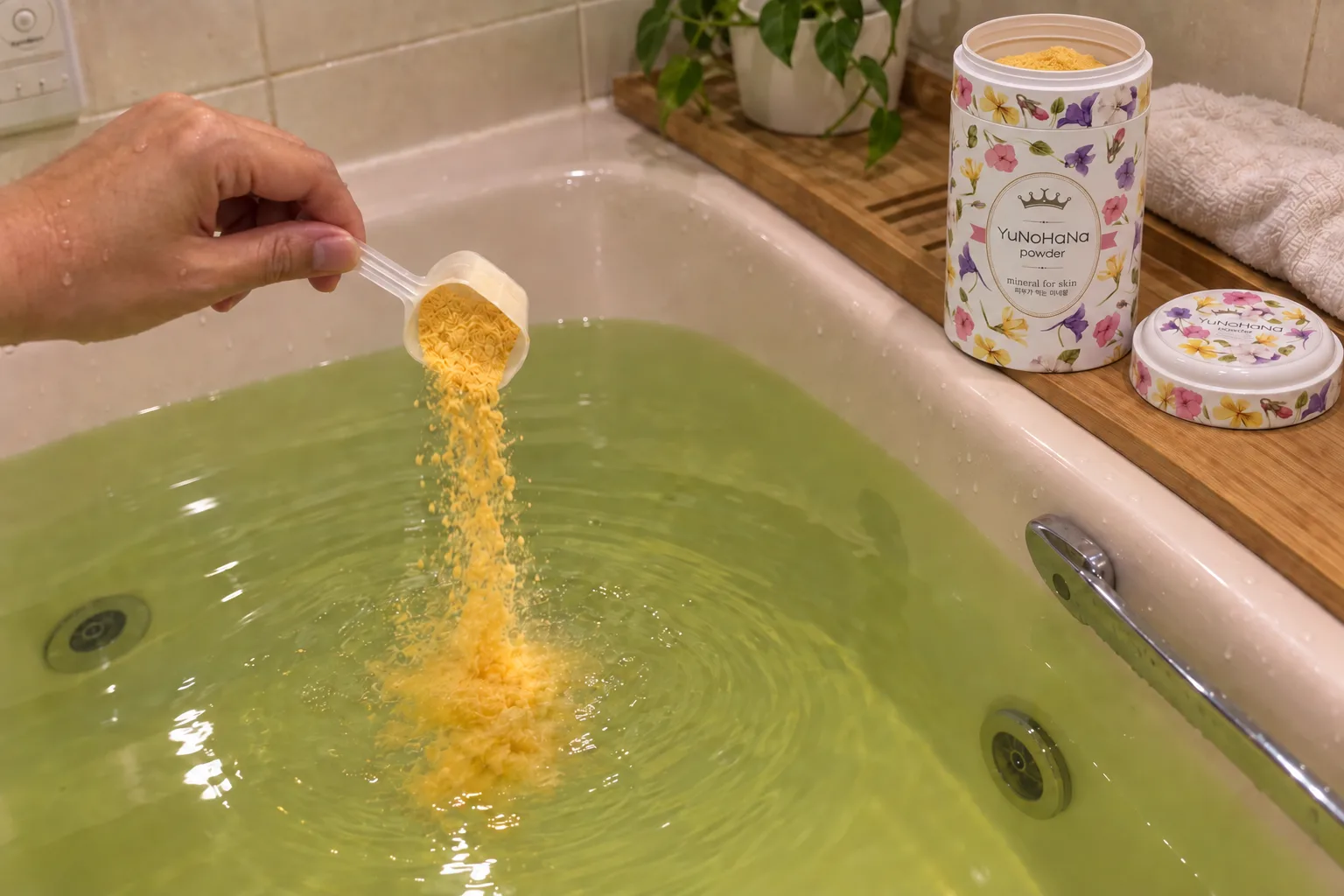
Run a warm bath, stir in a spoonful of Yunohana, and soak for fifteen to twenty minutes.[^4] When you are done, there is no need to rinse; just pat dry. No special equipment and no long list of steps, just a soak that comes close to a hot spring, at home.
Tonight, in the tub
A good end to the day doesn't have to be elaborate. Warm water and a spoonful are enough. If you have never tried a bath soak, tonight is a fine place to start, slowly, with Yunohana.
This is an introduction to Yunohana and to bath soaks. Yunohana is a cosmetic product and is not intended to diagnose, treat, cure, or prevent any disease.
[^1]: The bath as at-home self-care and wellness in the U.S. The Good Trade — Nontoxic Bath Soaks [^2]: Shoppers looking for function and natural ingredients over scent alone. U.S. Bath Salts Market (Business Research Insights) [^3]: Yunohana customer reviews. bbs.yunohana.co.kr [^4]: Usage guidance. Yunohana 30th Anniversary Archive
 목욕이 채워 주는 것들